
Spotlight on Hopton Hall’s Walled Garden

Our Estate Director, Spencer Tallis, has been responsible for the Hall’s gardens and wider Estate for nearly 30 years and has overseen many different seasons of transformation.
He wanted to share a few interesting facts about the Walled Garden ahead of our July opening. If you’re lucky enough to bump into him on your visit, he’d be delighted to tell you more!

What was the early purpose of the Walled Garden?
Whilst the Walled Garden may be a visual ‘wow’ for today’s visitors, its original purpose was altogether more practical as a kitchen garden. We know from early records that fruit, vegetables and cut flowers were traded with other big houses in Derbyshire including Chatsworth House, Hardwick Hall and Kedelston Hall.
How many roses are in the Walled Garden?
Our Walled Garden is home to over 2,000 rose bushes of 20 different varieties, arranged over 40 beds and framed by 5,000 clipped plants.

How do you decide which varieties to include?
The garden was originally designed with colour in mind rather than smell but we’re fortunate that the majority of roses are really quite fragrant.
Our Walled Garden includes three different classes, all of which are known for their magnificent display:
Hybrid teas: considered the world’s most popular rose class, with their elegance created by long single stems, vase-like buds and sparse foliage.
Floribunda (its Latin translation is ‘many-flowering’): modern and hardy garden roses boasting large clusters of blooms bred by crossing hybrid teas with polyantha roses (a dwarf shrub with closely compacted flowers which make them ideal for massing, hedges and edging) to produce large, continuous clusters of vibrant blooms.
French Delbard: bred for their colour and visible on the right of the garden as you look up towards the summerhouse.
As any keen gardener will know, it’s always a case of trial and error when it comes to finding what works! Over time, we’ve replaced some poor performers with more disease-resistant and vigorously growing varieties.
When are your roses in bloom?
Varieties like Trioka (a coppery orange Hybrid Tea with a medium-sized bloom), Margaret Merril (a Floribunda Bush Rose where a white flower is overlaid with a pink blush) and Arthur Bell (another Floribunda Bush Rose sporting larger-semi double yellow blooms) are always the first to flower.
Our later-flowering hybrid teas include Indian Summer (bearing fully double blooms of apricot-orange) and Chartreuse de Parme (bearing large double cerise blooms).
Some 98% of our roses are perpetual flowering which means they will keep flowering (with the exception of some of our climbers which flower only once). Of course, we can never fully predict the weather conditions in any particular year but this year’s mild winter and sustained sunshine in May have certainly helped. In a normal season, our roses will keep producing well into October.
What is the Rose Walk?
The Rose Walk is our name for the long avenue lined with statues that runs below the Walled Rose Garden. It was once an original part of the Hall’s garden – and most likely would have been its focal point – but had become overgrown. Alium, with their tall stems and striking blooms, were later planted here but are not in keeping with the design of this feature. We have plans to re-plant the ten or so large beds and are currently deciding on both design and colour.
What else can I see in the Walled Garden?
Past visitors to the Hall will be familiar with its Crinkle-Crankle Wall and 11-metre-high Summerhouse – both of which have really interesting back stories.

In preparation for the summer opening of the Walled Garden and Month of Art 2026, we’ve added a further 14 storyboards so visitors can share in our excitement about constantly learning something new about the estate.
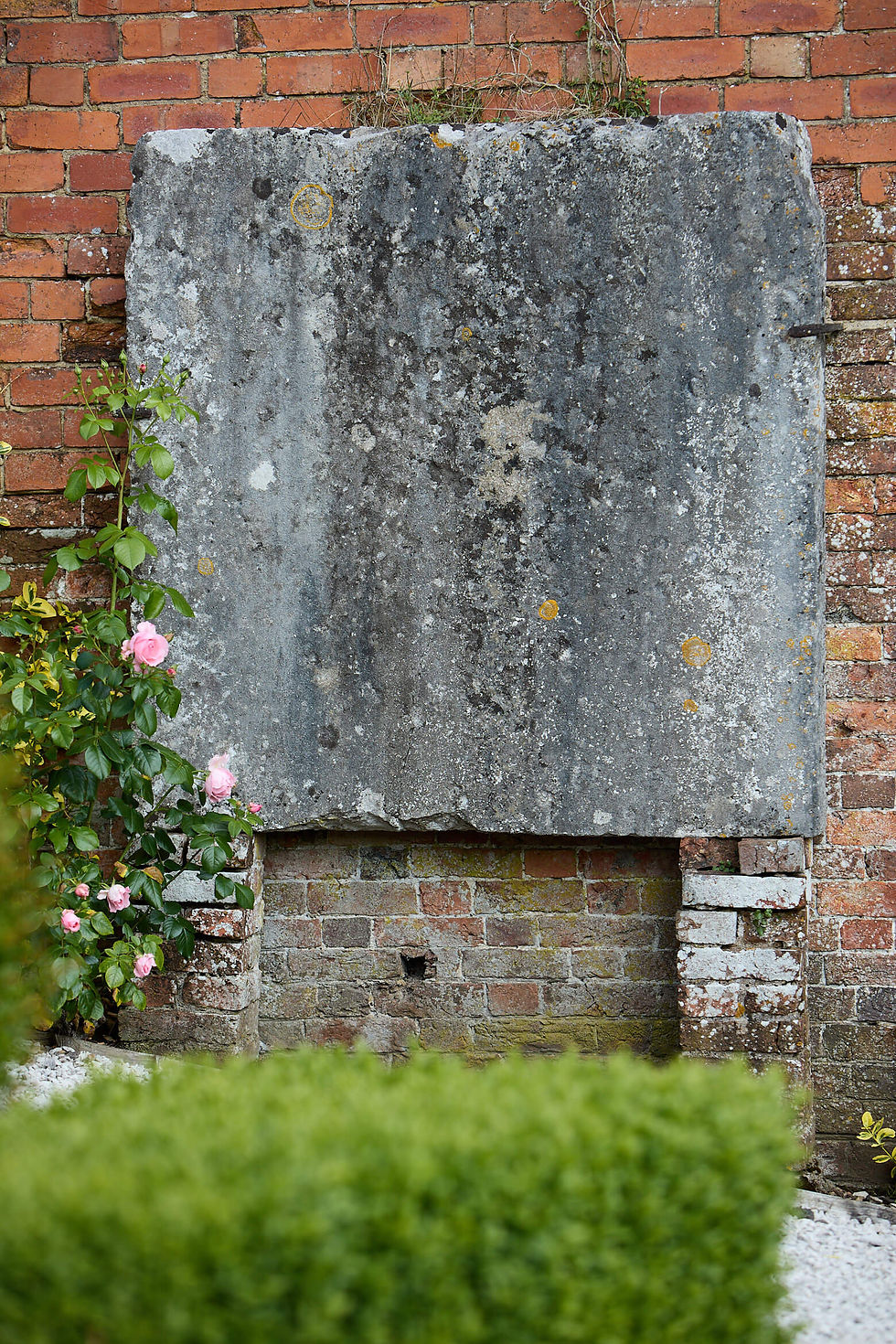
In the Walled Garden, this includes the Musket Firing Range where Sir John Gell – a prominent and ruthless Parliamentarian military commander – rapidly trained local miners and labourers into a disciplined, functioning infantry unit before deploying them to garrison Derby or fight at Hopton Heath during the English Civil War.
There are stories to share in other parts of the Estate too – including about the newly renovated Stables, Ha-Ha and Ridge and Furrow.
And all whilst the Month of Art is taking place which offers the chance to engage with local artists.
All in all, our Summer opening is certain once again to be a very social occasion in a truly beautiful setting.
Learn more about the July opening of the Walled Garden.
Photo credits: Ian Daisley Photography
